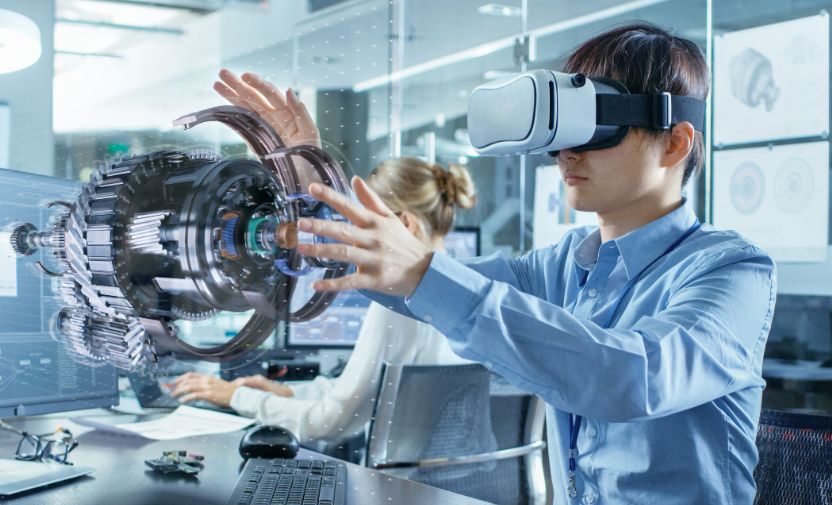
Artificial Intelligence (AI) has rapidly evolved from a futuristic concept into a practical technology that influences nearly every aspect of our daily lives. Whether you’re unlocking your smartphone with facial recognition, asking a virtual assistant to set a reminder, or receiving personalized recommendations while shopping online, AI is working behind the scenes to make these experiences faster, smarter, and more convenient. As technology continues to advance, AI is becoming increasingly integrated into the tools and devices people use every day, reshaping industries and improving how we live and work.
The future of artificial intelligence is incredibly promising. Businesses are investing billions in AI-powered solutions, researchers are developing more advanced algorithms, and consumers are embracing intelligent technologies that simplify everyday tasks. While AI offers enormous opportunities for innovation and productivity, it also raises important questions about privacy, ethics, and the future of employment. Understanding how AI is transforming everyday technology can help individuals and businesses prepare for the exciting changes ahead.
What Is Artificial Intelligence?
Artificial Intelligence refers to computer systems that can perform tasks that normally require human intelligence. These tasks include learning from data, recognizing speech, understanding language, solving problems, making predictions, and making decisions. Unlike traditional software that follows fixed instructions, AI systems improve their performance over time by analysing data and identifying patterns.
Modern AI combines several advanced technologies, including machine learning, deep learning, natural language processing, computer vision, and predictive analytics. Together, these technologies allow computers to understand information, adapt to new situations, and automate complex processes with remarkable accuracy.
AI Has Become Part of Everyday Life
Many people use artificial intelligence every day without realizing it. AI powers search engines, voice assistants, social media feeds, online shopping platforms, navigation apps, streaming services, banking systems, and even home security devices. Every time a smartphone suggests the next word while typing or a music app recommends songs based on listening history, artificial intelligence is at work.
This widespread adoption demonstrates that AI is no longer limited to technology companies or scientific research. Instead, it has become an essential component of modern digital life, making technology more responsive, personalized, and efficient.
Smarter Smartphones Through Artificial Intelligence
Smartphones are among the best examples of how AI is transforming everyday technology. Modern devices use artificial intelligence to improve camera quality, optimize battery performance, enhance security, and provide personalized user experiences.
AI-powered cameras automatically detect scenes such as landscapes, portraits, food, or night environments and adjust settings to capture better photographs. Facial recognition allows users to unlock their devices securely within seconds, while intelligent battery management learns user habits to reduce unnecessary power consumption.
Virtual assistants such as Siri, Google Assistant, and Alexa have also become more accurate in understanding voice commands. Users can send messages, schedule appointments, search for information, or control smart home devices simply by speaking naturally.
AI Is Revolutionizing Smart Homes
Artificial intelligence has transformed ordinary homes into intelligent living environments. Smart home systems can automatically control lighting, heating, air conditioning, security cameras, entertainment devices, and household appliances based on user preferences and daily routines.
For example, smart thermostats learn when family members leave or return home and automatically adjust room temperatures to improve comfort while reducing energy consumption. Smart security cameras can recognize familiar faces, detect unusual movement, and send instant alerts to homeowners. Voice-controlled smart speakers allow users to operate multiple devices without touching a single button.
As AI technology continues to improve, homes will become even more connected, automated, and energy-efficient.
Transforming Healthcare With AI
Healthcare is one of the industries experiencing the greatest impact from artificial intelligence. Hospitals and medical professionals now use AI to analyse medical images, detect diseases earlier, improve diagnosis accuracy, and develop personalized treatment plans.
Artificial intelligence can examine X-rays, CT scans, and MRI images much faster than traditional methods while helping doctors identify potential health issues at an early stage. Early diagnosis often increases treatment success rates and improves patient outcomes.
AI also supports virtual healthcare through intelligent chatbots and digital assistants that help patients schedule appointments, receive medication reminders, monitor symptoms, and access reliable medical information. As wearable health devices become more advanced, AI will continue to play an important role in preventive healthcare and continuous patient monitoring.
Artificial Intelligence in Education
Education has become more personalised thanks to AI-powered learning platforms. Intelligent educational software can analyse a student’s learning style, identify strengths and weaknesses, and recommend customised lessons that match individual abilities.
Students receive instant feedback while teachers gain valuable insights into classroom performance. AI also automates administrative tasks such as grading assignments and organising learning materials, allowing educators to focus more on teaching.
In the future, virtual AI tutors may provide one-on-one assistance to students anywhere in the world, making quality education more accessible than ever before.
AI Is Changing Transportation
Transportation is becoming safer and more efficient through artificial intelligence. Navigation applications use AI to analyse traffic conditions, weather, road closures, and historical travel data before suggesting the fastest routes.
The development of self-driving vehicles represents another major advancement. Autonomous cars rely on cameras, sensors, radar, computer vision, and machine learning to understand their surroundings and make driving decisions in real time. Although fully autonomous transportation is still developing, AI continues to improve vehicle safety features such as lane assistance, automatic emergency braking, and collision detection.
Public transportation systems are also benefiting from AI by improving scheduling, reducing traffic congestion, and optimising fuel efficiency.
Business Operations Are Becoming More Intelligent
Businesses across every industry are adopting artificial intelligence to improve productivity, reduce costs, and deliver better customer experiences. AI-powered chatbots now provide instant customer support twenty-four hours a day, answering common questions without requiring human assistance.
Marketing teams use AI to analyse customer behaviour, personalise advertisements, and recommend products based on previous purchases. Financial departments rely on AI to detect fraud, assess risks, and automate repetitive administrative tasks.
By processing enormous amounts of information within seconds, AI enables organisations to make faster and more informed decisions than ever before.
AI in Entertainment and Digital Content
Entertainment platforms increasingly depend on artificial intelligence to deliver personalised experiences. Streaming services recommend movies, television shows, and music based on viewing history, while gaming companies use AI to create more realistic opponents and immersive gameplay.
Content creators also benefit from AI-powered tools that assist with video editing, image generation, script writing, audio enhancement, and graphic design. These technologies help creators produce high-quality content more efficiently while allowing them to focus on creativity rather than repetitive editing tasks.
Generative AI has opened entirely new possibilities for digital content creation, enabling users to produce professional-quality visuals, presentations, articles, and multimedia with minimal technical expertise.
Improving Cybersecurity With Artificial Intelligence
As cyber threats continue to increase, artificial intelligence has become an important tool for protecting digital systems. AI can monitor networks continuously, identify suspicious behaviour, detect malware, and respond to security threats in real time.
Unlike traditional security software, AI learns from previous attacks and constantly updates its ability to recognise new threats. Financial institutions, healthcare providers, government organisations, and businesses rely on AI to protect sensitive information and reduce cybersecurity risks.
Although cybercriminals may also attempt to misuse AI technologies, responsible development and continuous monitoring can help strengthen digital security worldwide.
Benefits of Artificial Intelligence
Artificial intelligence offers numerous advantages that improve both personal and professional life. It automates repetitive tasks, allowing people to focus on creative and strategic work. AI increases efficiency by processing large volumes of information quickly while reducing human error. It provides personalised experiences in areas such as shopping, education, healthcare, and entertainment, making technology more useful and user-friendly.
Businesses benefit from lower operational costs, faster decision-making, and improved customer satisfaction. Individuals enjoy smarter devices, more accurate recommendations, and greater convenience in everyday activities. As AI technology becomes more advanced, these benefits are expected to expand even further.
Challenges and Ethical Considerations
Despite its many advantages, artificial intelligence also presents several important challenges. One major concern involves data privacy, as AI systems often require large amounts of personal information to function effectively. Protecting this data is essential for maintaining public trust.
Another concern is workforce transformation. While AI creates new career opportunities, it may also automate certain repetitive jobs, requiring workers to develop new skills. Ethical issues such as algorithm bias, transparency, accountability, and responsible decision-making must also be carefully addressed to ensure AI systems treat individuals fairly.
Governments, businesses, and technology developers must work together to establish regulations and ethical guidelines that encourage innovation while protecting society.
The Future of Artificial Intelligence
The future of artificial intelligence looks incredibly exciting. AI systems will become more intelligent, more efficient, and more deeply integrated into everyday technology. Generative AI will continue producing high-quality text, images, videos, software, and creative content. Intelligent robots will assist industries such as manufacturing, logistics, agriculture, healthcare, and home services by performing repetitive and physically demanding tasks.
Cities will become smarter through AI-powered traffic management, energy optimisation, waste collection, and public safety systems. Businesses will increasingly use AI assistants to automate workflows, improve communication, and support better decision-making. Rather than replacing humans entirely, artificial intelligence will most likely become a powerful partner that enhances productivity, creativity, and innovation across every industry.
As computing power grows and AI models become more sophisticated, the technology will continue solving complex global challenges while creating entirely new opportunities for economic growth and scientific discovery.
Conclusion
Artificial Intelligence is transforming everyday technology at an extraordinary pace, changing the way people communicate, work, travel, learn, shop, and access healthcare. What was once considered a futuristic idea has now become an essential part of modern life, powering countless devices and services that people rely on every day. From intelligent smartphones and smart homes to advanced healthcare systems and business automation, AI is making technology more efficient, personalised, and accessible.
Looking ahead, the future of artificial intelligence promises even greater innovation. As AI continues to evolve responsibly, it will unlock new possibilities for individuals, businesses, and society as a whole. While challenges related to privacy, ethics, and workforce adaptation must be carefully managed, the potential benefits far outweigh the risks. By embracing AI thoughtfully and preparing for its continued growth, we can build a future where technology works alongside people to improve quality of life, drive innovation, and create a smarter, more connected world.